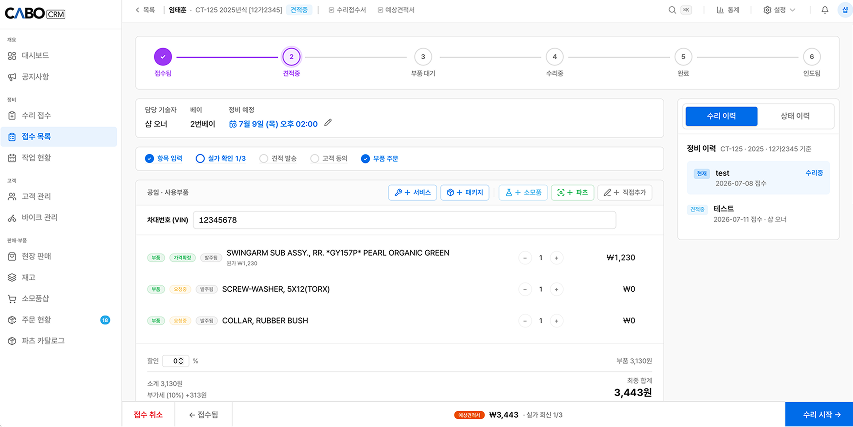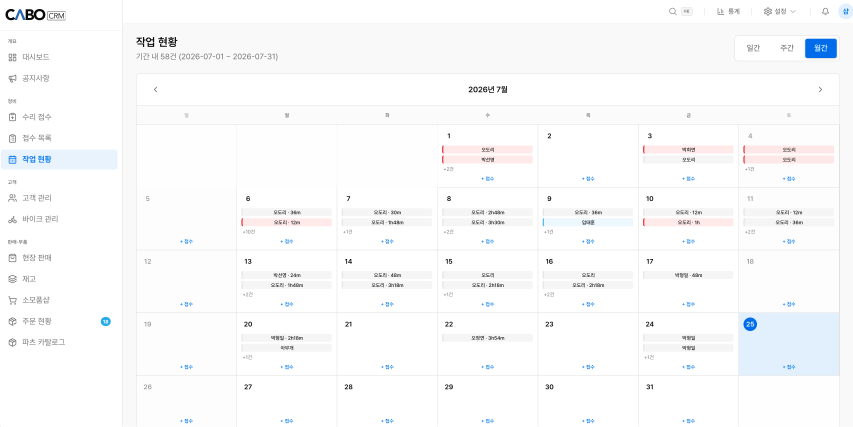
CABO is a multi-tenant CRM built for the small motorcycle repair shops that are still working on paper and phone calls. It carries a bike from the moment it comes in — intake, estimate, parts order, repair, invoice — and keeps the full history in one place.
As art director I led the design language and the token system across four very different portals: headquarters, the shop, the parts supplier, and the customer. The goal was one calm, consistent interface, even though each role sees a different job.
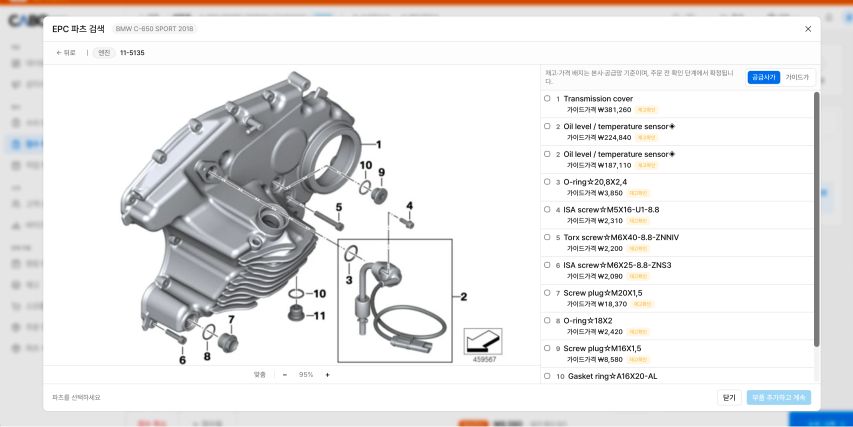
One product, four kinds of user. And a harder problem underneath — a proper parts catalog for Korean motorcycles simply does not exist, so the shop cannot look a part up the normal way.
- 01
One shop, four doors
Separate portals for HQ, shop, supplier and customer, all speaking the same visual language through a shared token system and component library. - 02
The job as a stepper
Every repair moves through a clear six-stage status — received, quoting, waiting for parts, in repair, done, delivered — that everyone in the shop can read at a glance. - 03
No login for customers
Customers approve an estimate, sign consent, and see their invoice and repair record through secure token links — no account, no friction. - 04
A catalog from nothing
A companion Chrome extension collects real parts diagrams, and AI vision turns them into a structured electronic parts catalog the shop can actually use.
“In Korea, four-wheel cars have a full history record. Two-wheels have almost nothing. We wanted to build that record — one repair at a time.”
The MVP is live on cabomotors.co.kr. The data schema deliberately mirrors Korea's official vehicle-history fields, so every repair CABO records is seeded for a future two-wheel history product — something that does not exist in Korea today.
- ↳Design system and token library
- ↳Four role-based portals (HQ · shop · supplier · customer)
- ↳PDF invoices and repair-history certificates
- ↳Scheduling and service-bay calendar
- ↳Supplier ordering and settlement